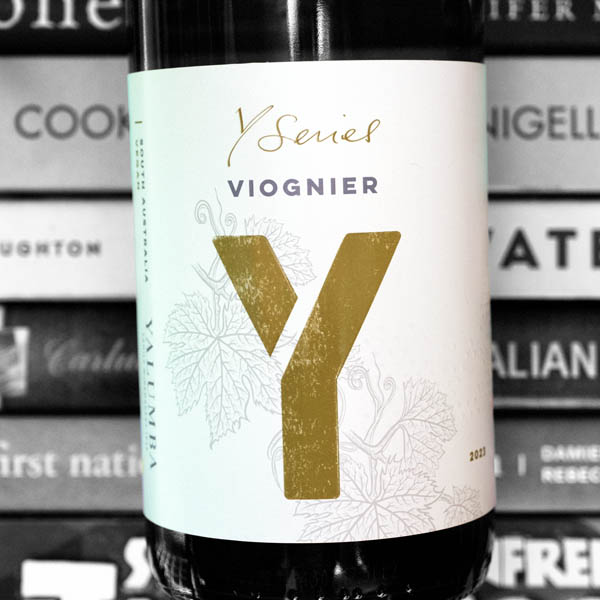
Yalumba Y Series Viognier 2023 (South Australia, SA)
Subtle dried apricot, among pear skin and cooled, gently flambéed flesh (also of the pear kind). Smells plump and inviting rather than overwhelming, as some exhuberant viognier is wont to be. There’s a touch of (attractive) low-level match-strike sulphide pong too, which only adds to the aromatic interest. Peach kernel. Dried peel. How it tastes too: white stone-fruit kernel intensely charged, although restrained, with just the right a lick of slipperiness, which is then tweaked by dried mandarine peel. It’s not super-long, but nor does it peter out, while the texture is absolutely bang-on. Has some style and flavour this. 90/100 - 8/10 - 😋😋 - $15 cellar direct. You may find this wine out there in retail land for as little as $12.99 a bottle (or $11.69 in a six-bottle buy). This I know because I’ve bought quite a few bottles from Hurley Cellars in Parkville (SA) over the past few months. What a bargain. It makes a great g’spritzer too when the temperature is on the high-side.
This wine was assessed in one of my little blind line-ups, so I was not aware of its humble origins at the time of tasting. It has serious lineage though, given Yalumba’s fine work growing this curious cultivar over the decades, as may be experienced in both the serious statement white, Virgilius, and the more modest Eden Valley bottling (although I’ve encountered neither for some time). This Y—the best release since the 2019—is so seriously good I can’t help thinking that it may have benefitted from a drop or two trickling into it from Yalumba’s more exalted examples above. I’ll endeavour to find out. The Hill-Smith family do grow Viognier on their Oxford Landing property in some quantity also.
If this was a bit murky-looking and presented in a natty package, it would be triple the price, and while it can’t leverage any natty credentials it is ‘wild-yeast’ fermented. So there’s some cred in this regard for those that care about such things. So close your eyes and dream that you’re drinking an exotic, small-batch field-blend—and then pinch yourself, because you’re paying just a third of the price.
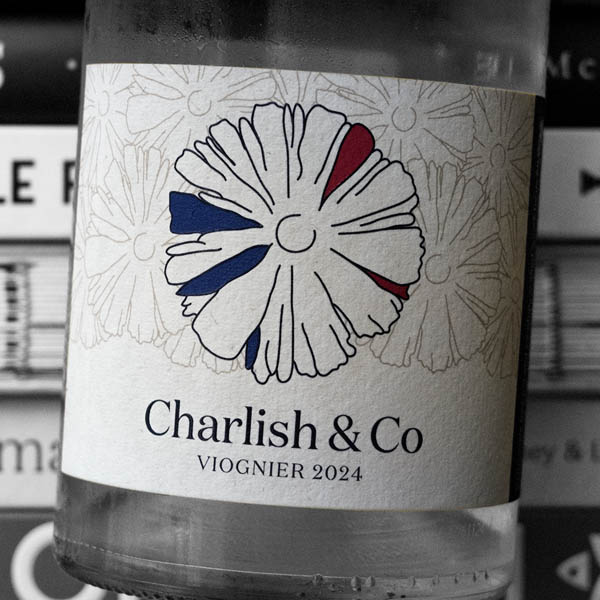
Charlish & Co. Viognier 2024 (McLaren Vale, SA)
Super pure—although subdued—compressed apricot, Turkish Delight rose, then getting edgier as nuttier apricot kernel builds. So somehwat terpene perfumed, but not too heady. There’s a touch of Poire William too, with transitory wafts of makrut lime. This is so much fun. (Which is what the majority of Australian wine used to be about until wine judges, sommeliers, distributors, and influencers, decided to dole out advice to the otherwise). Has juice and peel, and super-intense, compressed apricot pear saltiness. The palate is a total blast too: bracing, packed with lingering, compressed, liquid ozone sea spray melty, white nectarine fruit, and a tweak of rocket bitterness. Reckon this will develop another facet or two with a year of so in bottle. 93(94)/100 (e) - 9/10 (h) - 😋😋😋 - $30 cellar direct. I’m maybe being a bit miserly with my (e) score, as I’d almost certainly dish out a gold—95 plus—at an Australian wine show. Like the above, this is an absolute bargain considering all the depth and intensity this wine contains. Hey, on a hot day you might even chuck in a couple of ice cubes and still be rewarded with thrilling intensity, as well as a tweak more chill.
Now this does have ‘natural wine’ credentials, although it evidentally also has a judicious amount—read minimal—of sulphur added. This advice, provide, if you’re only into full—feral-faeces—natty. According to the Charlish and Co. website it gets two days skin contact, wild-yeast fermentation and then maturation for nine months in a second use French oak puncheon. It is also, ‘…hand bottled onsite, unfined and unfiltered by us.’ The ‘us’ here being Rebecca Stubbs—whose wine label this is—and Duane Coates M.W. The grapes are sourced from a bio-dynamically farmed vineyard in Blewitt Springs. There's plenty of so-called natural wines out there which are sourced from conventionally farmed vineyards. No judgement here, just an observation.
You can read all about Coates by clicking this link. Stubbs, meanwhile, is a chef by bakground and one who’s held in high regard. You can read all about her gastronomic journey here. So when she makes a food pairing suggestion for her yummy viognier of ‘…forest mushrooms, garden herbs and butter tossed through linguini, or a classic roasted chicken with crunchy roasted potatoes, garlic and baby carrots…’ you’d be smart to take her advice. For my part I reckon it sits in the glass alongside some Kapitan—a.k.a.Nonya—chicken most agreeably also.
Soumah Single Vineyard Equilibrio Viognier 2023 (Yarra Valley, Vic)
Opens early—chilled—with considerable complexity this. Semi-dehydrated, bitter orange peel; warm, yellow peachy flesh attached to the kernel. Some cashew things and white sweetcorn silk. (Has a Roussanne/Viognier glow*.) But also just the right amount of cucumber peel, bitter skin cut. With more air and warmth there’s a grachai rhizome character (what what the genius chef-writer, David Thompson, describes as wild ginger). Some pineapple cube too. Has yellow—peachy, apricot fuzzy—fruit feeling flavours on the palate too, with phenolic chew, and just the right amount of textural slinkiness. Fab width here. An integrated mouth-aroma dab of excellent sourdough crusty oak too. There’s fabulous succulence for the first two thirds, but—maybe I am being hyper-critical?—it pulls up a bit in the last. Great width though, and so, so, super-stylish. 94(95)/100 (e) - 10/10 (h) - 😋😋😋 - $92 cellar direct. Actually let’s make this a 95/100 straight up, as I’d certainly push it forward at a wine show.
I make the final observation about pushing the wine forward, as it is most important at an Australian wine show to confer gold medal-equivalent points to a wine that the judge feels is: a), special, and/or b), one that might somehow be overlooked by others. (All wine show judges will—have done—missed a star wine one time or another). Were I to be have been one of the judges at the Yarra Valley Wine Show, for example, which happened to be taking place the same week as I was assessing my line-up of exotic white wines in which the above was included, I would have ‘golded’ it to make sure it was brought to everyone’s attention. And accordingly I would have presented the arguments of my tasting note above about the wine's merits and why it should be so awarded. Since I’ve never been asked to judge this show this is, of course, most conjectural. It will be intresting to see what score and medal was awarded to this delicious wine, if indeed it was even entered. Now I am even more sure about this wine’s quality having watched it evolve over a few days, which understandably cannot be done at a wine show. So for the record I’m now giving it a definite 95/100. And I would have voted for it at trophy time.
The crazy-detailed Soumah labels which itemise, among other things, harvest date, oak format, pH, TA, yeast (wild apparently), also specifies the Viognier clone as HTK, 1968. My database has these listed as two separate clones, the former being a heat-treated version of the virussed latter, so I’ll investigate further. And in now doing so I’m told both clones are planted: with the former at a closely-planted 9000 vines per hectare, and the 1968 on a more conventional Australian vineyard spacing. What’s omitted on the label though is the vine age, but as the first release of Viognier from the estate was in 2010 we can assume they went in the early to mid-2000s before more recently imported clones of Viognier were released through the Yalumba nursery.
There really is a treasure trove of Viognier planting material available from Yalumba, with material sourced from Condrieu, Côte-Rôtie and the Ardèche in France, as well as California. The nursery’s website lists the Californian sources as Jade Mountain and Tablas Creek (ex-Beaucastel apparently), and although no sources for the French material is indicated I have notes that say the source material was obtained from Guigal and Yves Cuilleron. Both 1968 clones are still available and Yalumba’s team speak most highly of the virussed example especially.
*The glow I’m talking about here is that just-picked sweetcorn lustre which you can smell on your hands when you remove the husk and and silky strands. You can see the smell of fresh picked corn I reckon, and Roussanne and Viognier, can both have this aromatic when—like corn—it is picked just right. This wine I had in the same half-blind line-up as the Terre a Terre Fumé reviewed here also. Plus a few more exotic Chardonnays with a Mendoza/Gin Gin clone influence.
As a matter of practice, I also have what I call a rinse blend in my line-up, just for the fun of it. As well as a little sensory challenge. Which means that I rinse each glass with the same wine being poured to sample, and I then combine all the rinses in a jug which I then return to a final glass (I then randomise all the tasting glasses).
The rinse blend in my line-up I gave 91/100 and made the following observations among others: A touch more golden...Has some glow…A touch of cream...Apricot fuzz..Some durian-like grubbiness (in a good way). So the Soumah Viognier showed its presence pretty strongly I reckon.
